Olaf Holzapfel
About the Artist
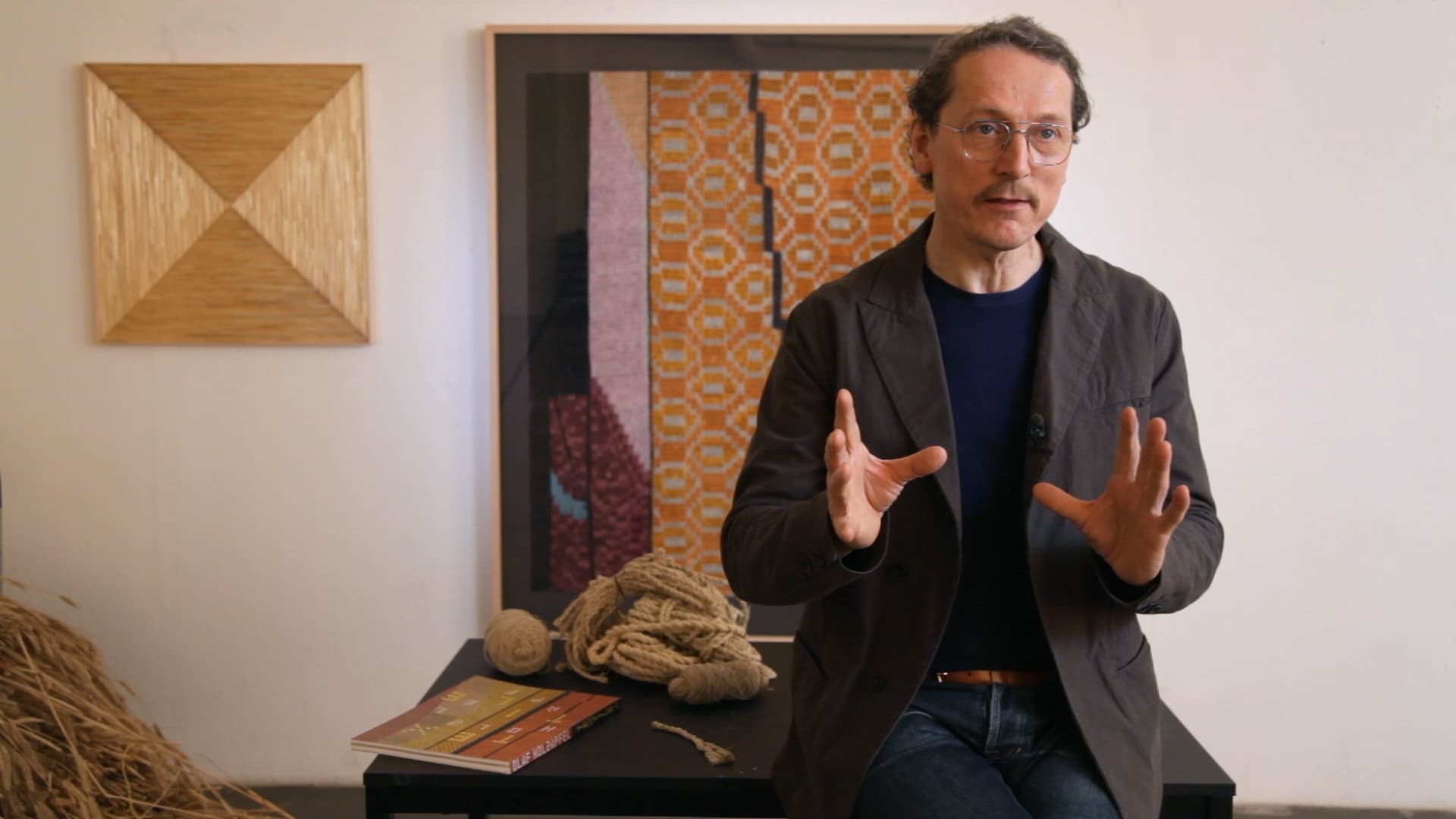
Olaf Holzapfel’s interest lies in concrete crafting techniques and the way these processes vary from region to region. He uses natural materials, paying attention to the specific ways they connect to their surrounding environment and housing. For Holzapfel, the textile framework is both organic and abstract, creating a flexible space that reveals the intersection between art and craft, countryside and city, cultural territories. A space that also reveals the textiles’ underlying formative causes – their constitution is always linked to abstraction, geometry, and time. The Chaguar Images [Chaguarbilder] (2011– 2015) are made from a material extracted from the chaguar plant by the Wichí communities of Northern Argentina; this material is then turned into threads to make nets for bags or cloths with particular abstract patterns. Holzapfel asked the Wichí weavers in Misión Chaqueña to translate his abstract, computer-generated designs into their own visual language. At the beginning of the collaboration, the women tried to realize the specific pattern, but ignored the visual possibilities of their own weaving techniques. They then used their own means to change the motifs, implementing a new visual idiom. Patterns are motionless but changeable; they are a place of inclusion and of connectedness. During the collaboration process, the craftswomen and artist came to an agreement regarding visual concepts, negotiating everything from the individual lines to the way they deliberate space. In this way, the vital connection between process and product was recreated. This enabled insight into techniques and experiences that help to shape the way we deal with others. For example, acknowledgement of the fact that inherent knowledge is intrinsically linked to the body and bodily practices, and then transfers into the community. Recognition of this is often denied to craftswomen in the hierarchical relationship between those who commission and those who make. The Chaguar Images are able to communicate this difficult relationship. Above all, creating an aesthetic space where formal questions and symbolic meaning are bound together, a space in which paths through an open landscape are to be represented.